
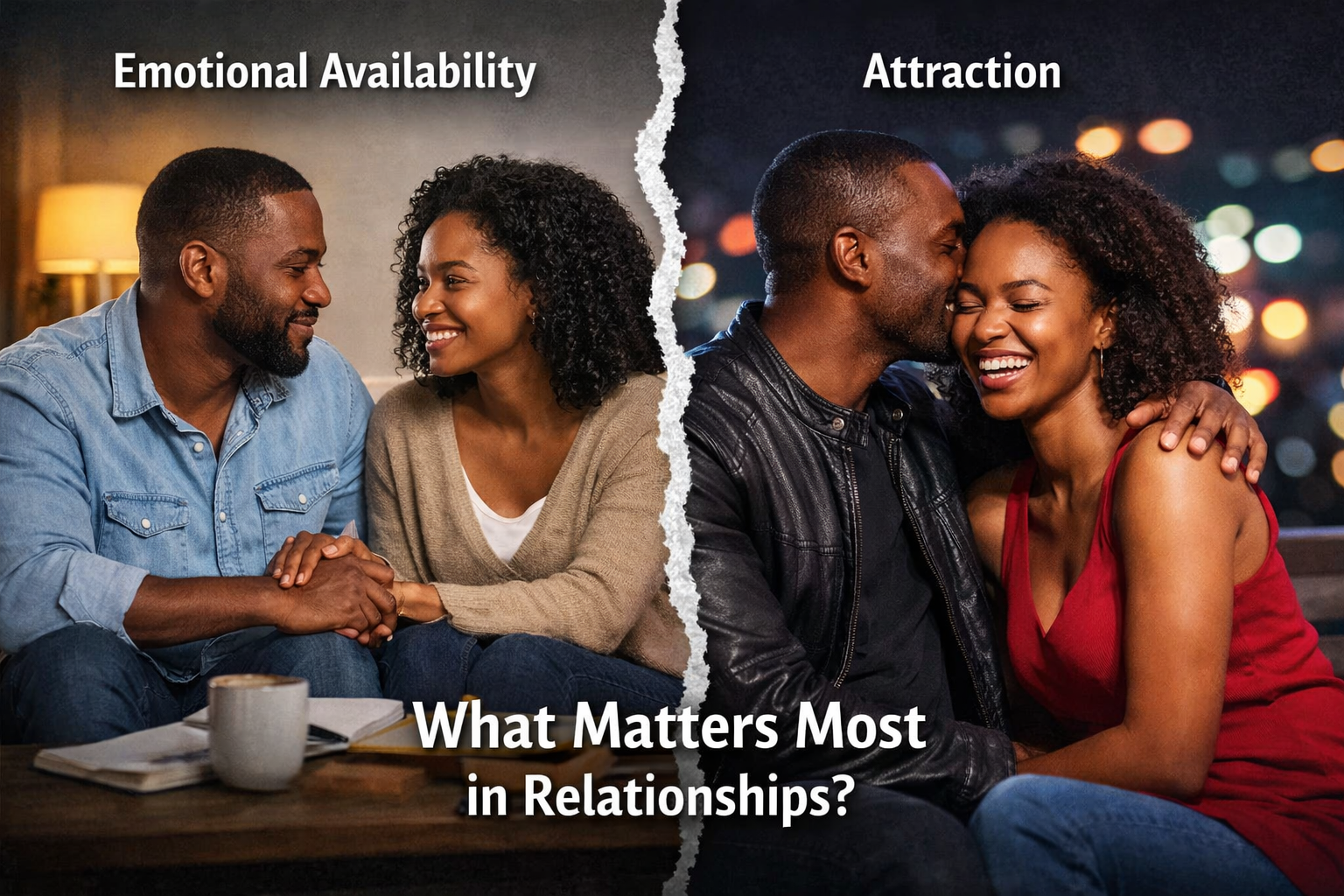
Yet over time, many people find themselves in relationships that started with undeniable attraction but gradually became confusing, draining, or emotionally unstable. The connection that once felt promising begins to feel inconsistent. Conversations lose depth, emotional support becomes unreliable, and the relationship starts to depend more on moments than on stability. This shift often leads to a deeper realization that attraction alone cannot sustain a meaningful connection.
This is where emotional availability becomes essential. While attraction may initiate a relationship, emotional availability determines whether it can grow, stabilize, and last. Without it, even the strongest attraction eventually weakens under the weight of unmet emotional needs, miscommunication, and internal confusion.
Understanding why emotional availability matters more than attraction requires looking beyond surface-level connection and examining how people engage emotionally, how they respond to vulnerability, and how they sustain consistency over time.
Attraction is immediate and often effortless. It does not require deep understanding or long-term commitment. It is influenced by physical appearance, personality traits, confidence, and even timing. You can feel attracted to someone without knowing anything about their emotional patterns or their capacity for connection.
John and Emma met at a social gathering and felt an immediate connection. Their conversations were effortless, and the attraction between them was obvious from the start. John was attentive when they were together, often making Emma feel valued and understood in those moments. However, outside of those interactions, his behavior shifted. He became inconsistent in communication, avoided deeper conversations, and often withdrew when emotional topics came up. Emma found herself holding onto the version of John she experienced in person, hoping it would become consistent. Over time, she began to notice that while the attraction remained strong, the emotional connection lacked stability. What felt promising at the beginning slowly became confusing because the relationship was sustained by moments rather than consistent emotional presence.
In real life, this is why many relationships begin quickly. Two people feel drawn to each other, spend time together, and assume that the connection will naturally deepen. The presence of attraction creates a sense of momentum. It feels like something is already working, so there is little reason to question it in the early stages.
However, attraction is not structured. It does not guide how conflicts are handled, how communication is maintained, or how emotional needs are met. It creates a connection, but it does not sustain it. This is why relationships based primarily on attraction often feel intense at the beginning but unstable over time.
Emotional availability, on the other hand, is not immediate. It develops through self-awareness, emotional maturity, and a willingness to engage honestly with another person. It is reflected in how someone communicates their feelings, how they respond to yours, and how consistent they are in their presence.
Thomas and Rose had a different beginning. There was no immediate intensity or overwhelming attraction when they first met. Their connection developed gradually through regular conversations and shared experiences. Thomas was consistent in his communication, clear in his intentions, and present during both easy and difficult moments. Rose noticed that he listened carefully, responded thoughtfully, and remained engaged even when conversations required emotional depth. Over time, this consistency created a sense of trust and calm. What started as a steady connection gradually deepened into genuine attraction. The relationship felt stable not because of intensity, but because it was supported by emotional availability that remained consistent over time.
In practical terms, emotional availability means being able to show up in a relationship beyond moments of excitement. It involves listening without defensiveness, expressing thoughts clearly, and maintaining connection even when things are not easy. It also includes the ability to handle discomfort, address issues directly, and remain present rather than withdrawing.
A common example can be seen in relationships where one partner is highly expressive and the other is emotionally distant. At the beginning, attraction may overshadow this difference. The expressive partner feels drawn to the mystery or calmness of the other, while the distant partner appreciates the warmth and openness.
Over time, however, this dynamic creates imbalance. The expressive partner begins to feel unheard or unsupported, while the emotionally distant partner may feel overwhelmed or pressured. Without emotional availability, the relationship struggles to find stability because the connection is not equally sustained.
This is one of the clearest indicators that attraction cannot compensate for emotional gaps. It can bring people together, but it cannot resolve differences in how they engage emotionally.
Another important aspect is consistency. Attraction is often strongest in moments, when you are together, when conversations are flowing, or when there is excitement. Emotional availability, however, is reflected in consistency over time. It is seen in how someone communicates when they are busy, how they respond during conflict, and how they maintain connection even when circumstances change.
Thomas and Rose had a different beginning. There was no immediate intensity or overwhelming attraction when they first met. Their connection developed gradually through regular conversations and shared experiences. Thomas was consistent in his communication, clear in his intentions, and present during both easy and difficult moments. Rose noticed that he listened carefully, responded thoughtfully, and remained engaged even when conversations required emotional depth. Over time, this consistency created a sense of trust and calm. What started as a steady connection gradually deepened into genuine attraction. The relationship felt stable not because of intensity, but because it was supported by emotional availability that remained consistent over time.
In modern relationships, inconsistency is one of the most common sources of confusion. Someone may show interest one moment and withdraw the next. They may express affection but avoid deeper conversations. This creates a pattern where the relationship feels uncertain, even if the attraction remains strong.
This inconsistency is often not about lack of attraction. It is about limited emotional availability. The person may be drawn to you, but they are not equipped to engage consistently. This leads to a situation where the relationship feels emotionally unstable despite physical or initial connection.
As John and Emma continued seeing each other, the inconsistency became more noticeable. There were periods where John would show interest and closeness, followed by moments of distance without explanation. Emma found herself trying to interpret his behavior, questioning whether she was overthinking or whether something had changed. The attraction kept her engaged, but the lack of emotional clarity created internal tension. This pattern made it difficult for the relationship to progress because the connection depended on unpredictable engagement rather than stable interaction.
From a psychological perspective, emotional availability is closely linked to self-awareness. A person who understands their own emotions is more capable of understanding and responding to someone else’s. Without this awareness, emotional engagement becomes reactive rather than intentional.
In daily life, this shows up in communication patterns. An emotionally available person can express what they feel without creating confusion. They can clarify misunderstandings, acknowledge mistakes, and engage in conversations that build understanding. An emotionally unavailable person may avoid these interactions, leading to unresolved tension.
This difference becomes especially important during conflict. Attraction does not resolve conflict. It may soften it temporarily, but it does not address the underlying issue. Emotional availability allows two people to navigate disagreement without disconnecting. It creates space for resolution rather than avoidance.
For example, in a relationship where both partners are emotionally available, conflict may still occur, but it leads to deeper understanding. Each person is willing to listen, reflect, and adjust. The relationship becomes stronger because it can withstand difficulty.
In contrast, when emotional availability is lacking, conflict often leads to withdrawal, defensiveness, or silence. Issues remain unresolved, and the relationship gradually becomes strained. Attraction may keep the connection alive for a while, but it cannot repair what is not addressed.
Another critical factor is emotional safety. Emotional availability creates an environment where both people feel safe to express themselves without fear of dismissal or judgment. This safety is what allows vulnerability to exist within the relationship.
Without emotional safety, people begin to hold back. They avoid sharing their thoughts, minimize their feelings, or adjust their behavior to prevent conflict. This creates a surface-level connection where attraction may still exist, but depth is missing.
In many modern relationships, this lack of emotional safety is subtle. The relationship may appear functional, but conversations remain shallow, and deeper topics are avoided. Over time, this creates a sense of distance, even if the relationship continues.
It is also important to consider how lifestyle and daily habits influence emotional availability. A person who is constantly distracted, overwhelmed, or disconnected from their own internal state is less likely to engage emotionally with someone else. Their attention is divided, and their emotional capacity becomes limited.
This is where the connection between personal growth and relationships becomes clear. Emotional availability is not only about how you interact with a partner. It is also about how you manage your own internal world. Without self-regulation, reflection, and intentional living, emotional engagement becomes inconsistent.
Attraction does not require this level of internal structure. It can exist regardless of personal habits or emotional awareness. This is why someone can be highly attractive yet emotionally unavailable. The two are not directly connected.
This distinction becomes especially important when evaluating long-term relationships. Attraction may influence the decision to enter a relationship, but emotional availability determines whether it is sustainable. Over time, the absence of emotional availability becomes more significant than the presence of attraction.
Many people experience this shift gradually. At the beginning, attraction feels sufficient. As time passes, the need for deeper connection becomes more apparent. Conversations need to carry meaning, support needs to be consistent, and the relationship needs to feel stable.
When these elements are missing, the relationship begins to feel incomplete. It may continue, but without a sense of fulfillment. This often leads to confusion because the attraction is still present, yet the relationship does not feel right.
This is where clarity becomes important. Recognizing the difference between attraction and emotional availability allows for more intentional decision-making. It shifts the focus from how the relationship feels in moments to how it functions over time.
In practical terms, this means observing patterns rather than relying on isolated experiences. It involves paying attention to how someone communicates, how they handle discomfort, and how consistent they are in their behavior.
It also requires self-reflection. Emotional availability is not only something to look for in others. It is something to develop within yourself. The ability to communicate clearly, remain present, and engage consistently contributes to the overall stability of the relationship.
In contrast, Thomas and Rose were able to navigate challenges more effectively as their relationship developed. When misunderstandings occurred, they addressed them directly rather than avoiding them. Thomas did not withdraw when conversations became uncomfortable, and Rose felt safe expressing her thoughts without fear of being dismissed. This created a dynamic where both individuals could understand each other more clearly over time. Their connection was not built on constant excitement, but on a reliable pattern of communication and mutual engagement. This allowed them to evaluate their compatibility more accurately and build a relationship that felt both stable and meaningful.
This mutual responsibility is what creates a balanced connection. When both individuals are emotionally available, the relationship becomes more than attraction. It becomes a structured, evolving connection that can adapt and grow.
Another aspect to consider is long-term compatibility. Attraction can exist between people who are not aligned in values, communication styles, or life direction. Emotional availability, however, often reveals these differences more clearly.
When two people engage emotionally, their values and expectations become more visible. This allows for better evaluation of compatibility. Without emotional engagement, these differences may remain hidden until they create conflict later.
This is why relationships built on attraction alone often face unexpected challenges. The initial connection does not provide enough information about long-term compatibility. Emotional availability brings that information into focus.
In modern relationships, where options and distractions are abundant, emotional availability has become even more important. It requires intentional effort to remain present, to communicate clearly, and to build something stable.
Attraction may still initiate the connection, but it is no longer sufficient as a foundation. Without emotional availability, relationships become temporary, inconsistent, or superficial.
Understanding this does not mean dismissing attraction. It still plays a role in connection and compatibility. However, it should not be the primary factor in evaluating a relationship. Emotional availability provides a more accurate measure of whether the relationship can develop into something meaningful.
When you begin to prioritize emotional availability, your perspective on relationships changes. You become less focused on immediate chemistry and more attentive to patterns of behavior. You notice how someone engages over time, not just how they make you feel in isolated moments.
This shift leads to clearer decisions. Instead of trying to sustain a connection based on attraction, you evaluate whether the relationship is emotionally stable and supportive. This reduces confusion and allows for more intentional choices.
In the long term, relationships that are grounded in emotional availability tend to feel more stable, more predictable, and more fulfilling. They are not necessarily free from challenges, but they are equipped to handle them.
Attraction may bring two people together, but emotional availability determines whether they can remain connected in a way that is consistent and meaningful. Recognizing this distinction allows for a deeper understanding of what truly sustains a relationship.
When you begin to see relationships through this lens, the focus shifts from intensity to stability, from moments to patterns, and from initial connection to long-term alignment. This shift does not make relationships easier, but it makes them clearer.